Kashmiri vs Persian vs Spanish Saffron: Colour, Aroma, Price and Which to Buy
Kashmiri saffron vs Persian saffron vs Spanish and Afghan: thread shape, crocin, aroma, 2026 price per gram, supply and protected names, plus which to buy.
By Kashmiri Treasures · October 7, 2026 · 10 min read
Iran grows about 90 percent of the world’s saffron. Spain holds the oldest protected name in Europe and packs, by value, the largest share of saffron the United States imports. Afghanistan has become the third major exporter. Kashmir, by contrast, produced 19.58 tonnes in the whole of 2024-25. So why does Kashmiri Mongra sell for roughly twice the price of a good Persian Super Negin, and is it worth it?
The honest answer is that all four origins can produce ISO 3632 Category I saffron, and a fresh Persian lot will beat a stale Kashmiri one every time. What differs is thread shape, aroma, seller-reported colouring strength, scale of production, origin protection and price. Which one to buy depends on what you cook, how much you use, and how much the story behind the thread matters to you.
We sell Kashmir saffron, so we have a view. We have tried to keep this comparison fair anyway, and where a number comes from a seller rather than an independent lab, including ourselves, we say so.
Kashmiri saffron vs Persian vs Spanish vs Afghan: the comparison table
| Kashmiri (Mongra) | Persian / Iranian (Super Negin) | Spanish (Coupe, D.O.P. La Mancha) | Afghan (Herat Super Negin) | |
|---|---|---|---|---|
| Thread | Short, thick, curled, trumpet-tipped, stigma only | Long, straight, uniform, stigma only | Shorter, finer, stigma only in Coupe grade | Long, similar to Persian, stigma only |
| Aroma profile | Deep, honeyed, slightly earthy and floral | Clean, floral, bright | Lighter, delicate, hay-like | Honey, dried rose, fresh hay (seller tasting notes) |
| Colouring strength (crocin) | 230 to 270 reported by sellers for good lots; Category I floor is 200 | Category I when lab-tested; varies by lot | Category I when lab-tested; varies by lot | Category I claimed by leading brands |
| Harvest | Two to three weeks in October, picked at dawn | October to November | October to November | November to December |
| Growing altitude | 1,600 to 1,800 m, Karewa plateaus | Khorasan plateau | La Mancha plain | Herat province |
| Annual supply | 19.58 t (J&K, 2024-25) | About 90 percent of world output | Small domestic crop; large re-packing trade | Second-largest exporter by value in 2024 |
| Origin protection | GI No. 635 (registered 2020) | No single origin seal used internationally | D.O.P. Azafrán de La Mancha | None |
| 2026 retail, per gram (US) | USD 18 to 21 | USD 5 to 10 | About USD 7 to 14 | USD 10 to 16, falling to about 7 in 1 oz packs |
| Best for | Rice, kahwa, milk, desserts, gifting, wellness routines | Everyday cooking in quantity, Persian and Afghan dishes | Paella, seafood, Mediterranean cooking | Everyday cooking, value with a story |
Sources for supply and price figures are given in the sections below. The “best for” row is our opinion.
Where each saffron comes from, and how much there is
Scale explains most of the price gap, so it is worth seeing the numbers side by side.
Iran dominates. The Alibaba spice price guide puts Iranian output at about 90 percent of world saffron, and Tendata’s 2024 trade summary lists Iran as the largest exporter by value at USD 95.5 million, 37.7 percent of the global total. Much Iranian saffron also travels through third countries before it reaches a Western shelf.
Afghanistan was the second-largest exporter in 2024 at USD 60.4 million, according to the same Tendata summary, with most of it grown around Herat. Several of the best-run American saffron brands now source there.
Spain exported USD 56.2 million in 2024 and imported USD 56.3 million, the largest import figure of any country. That pairing tells you something: a great deal of saffron sold as “Spanish” is bulk saffron from elsewhere, packed in Spain, which is legal when labelled correctly. Spanish-grown saffron from La Mancha, protected by its D.O.P., is a small fraction of what carries a Spanish flag. In the United States, Tridge import data shows Spain supplying 82.8 percent of saffron imports by value in 2024, with Afghanistan at 9.3 percent.
Kashmir is tiny by comparison. Outlook Business reports Jammu and Kashmir production of 23.53 tonnes in 2023-24 and 19.58 tonnes in 2024-25, and The Statesman puts the cultivated area at 3,715 hectares. A large share of that crop is consumed within India, so the quantity that reaches international buyers is smaller still. Supply is also volatile: Kashmir Reader reported Pampore growers describing the autumn 2025 harvest at only 10 to 15 percent of a normal year after dry spells, and demand for Kashmir saffron abroad rose in 2026 as Iranian supply fell, per this summary of export reporting.
In short: the whole Kashmir crop in a good year would fit in one shipping container, and it comes from small family plots on the Karewa plateaus near Pampore. We describe those plots and their growers on our story page.
Colour: crocin and what the lab says
Colour comes from crocin, measured in an ISO 3632 test as colouring strength at 440 nm. Category I requires 200 or above; Category II 170; Category III 120. We explain the full standard in our saffron grades and ISO 3632 guide.
Sellers of Kashmiri Mongra, including us, report crocin readings of 230 to 270 for good Pampore lots. Growers credit the thick, oil-rich stigma to high altitude, lacustrine Karewa soil and cold October nights during the bloom. We want to be straight about the evidence: those figures come from sellers’ own lab reports rather than from a published independent comparison of origins, and we have not found a peer-reviewed study that lines Kashmiri, Iranian, Afghan and Spanish lots up side by side. That is exactly why we print the crocin number for each lot on the vial and publish the report on our verify page, so the claim can be checked lot by lot rather than taken on trust.
Good Persian and Afghan Super Negin also tests Category I when fresh and honestly handled; leading brands state ISO 3632 Category I on their packs, and Spanish Coupe from a reputable packer does the same. The practical difference for a cook is that a lot at 250 colours roughly a quarter more than a lot at 200, gram for gram. The practical difference for a buyer is that a published number beats an adjective.
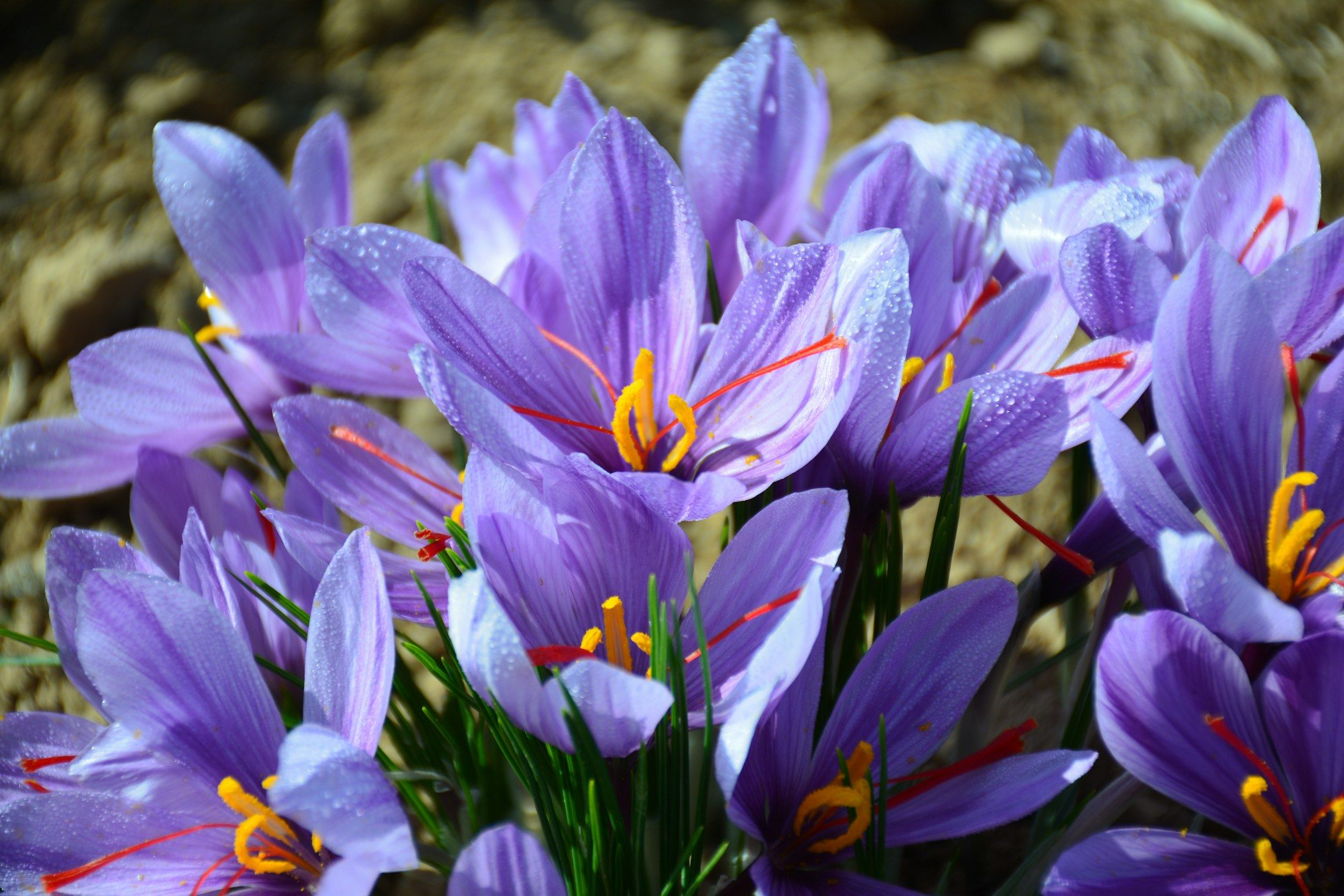
Aroma and flavour: how the origins taste
Aroma is the part of this comparison that no lab reduces to a single number, though safranal (the ISO 3632 aroma reading, 20 to 50 for all categories) sets a floor.
Kashmiri Mongra is the most intense of the four to our nose: deep honey, dried flowers, a faint earthiness, and a bitterness that lingers pleasantly. Reviewers of Kashmiri saffron sold in the US reach for the same words, “the most fragrant saffron I’ve ever cooked with” and “the deepest red threads I’ve ever seen.” It is the saffron for dishes where saffron is the point: kahwa, saffron milk, kheer, phirni, biryani, risotto alla Milanese.
Persian Super Negin is cleaner and more floral, with less earth. It is superb in Persian rice (tahdig), in stews and in sweets, and its long threads are beautiful on the plate.
Afghan Super Negin sits close to Persian in character. Burlap & Barrel describes its Herati lot as “honey, dried roses, fresh hay,” which matches our experience.
Spanish Coupe is lighter and more delicate, with a hay-like sweetness. In paella it is traditional and correct; a heavier saffron can overwhelm seafood.
None of these is “wrong.” If you grew up with Persian rice, Persian saffron tastes like home. If you grew up with kahwa in a Srinagar kitchen, nothing else quite does it; our Kashmiri kahwa recipe is the quickest way to taste what we mean.
Price per gram in 2026: Kashmiri, Afghan, Persian, Spanish
These are international direct-to-consumer retail prices per gram on 7 October 2026, from our market notes. Larger packs bring the per-gram price down in every origin.
- Kashmiri Mongra: USD 18 to 21 per gram for 1 g packs from US-based sellers; GBP 19 for a UK listing.
- Afghan Super Negin: USD 10 to 16 per gram at 1 g, falling to about USD 7 per gram in 1 oz packs.
- Persian Super Negin: USD 5 to 10 per gram, with 2 g packs at the top of the range and 28 g or larger at the bottom.
- Spanish Coupe: about USD 7 to 14 per gram, with D.O.P. La Mancha saffron at the top of that range.
Two cautions. First, the Alibaba spice guide warns that anything listed under about USD 8 per gram is highly likely to be adulterated or mislabelled, so the bottom of the Persian range is only safe in large packs from lab-tested brands. Second, UK supermarket 1 g sachets of Spanish or Iranian saffron sell at around GBP 3 per gram, while 0.4 g sachets work out to GBP 8 to 12 per gram; those supermarket grams are usually lower grades or older stock, and they illustrate why price alone is a weak guide. Our full breakdown by origin, grade and pack size is in saffron price per gram.
Why does Kashmiri saffron cost roughly double Persian? Scarcity first: around 20 tonnes against Iran’s hundreds. Labour second: Mongra is trimmed stigma by stigma by hand on small plots, where larger operations mechanise more of the work. Yield third: Kashmir’s harvests are volatile, and the 2025 failure pushed prices up. Finally, the GI and a per-lot lab test add cost a bulk exporter does not carry. You are paying for a rarer thing, and you are entitled to proof that it is the thing.
Origin protection: GI, D.O.P. and what they actually guarantee
Kashmir saffron has a Geographical Indication, GI No. 635, registered in 2020, covering saffron grown in named tehsils of Pulwama (which includes Pampore), Budgam, Srinagar and Kishtwar at 1,600 to 1,800 metres, in the three grades Mongra, Lacha and Guchhi. The India International Kashmir Saffron Trading Centre at Pampore runs GI tagging and an e-auction for registered growers. What the GI does: it defines the territory and the grades and gives the name legal protection at origin. What it does not do: inspect every jar sold in Dubai, London or New Jersey. Overseas, the only practical protection is traceability, a named grower, a harvest date and a lab number that match. We explain the registration in Kashmir saffron GI tag explained.
Spanish saffron has the D.O.P. Azafrán de La Mancha, a European protected designation of origin with its own seal and numbered labels. It is a strong guarantee of Spanish-grown origin. It does not apply to saffron merely packed in Spain, which is most of what carries a Spanish name abroad.
Iranian and Afghan saffron are sold under grade names (Super Negin, Negin, Sargol, Pushal) rather than a single internationally used origin seal. Good brands substitute for this with their own lab testing, named farmers and ISO 3632 claims. Several do this very well.
Which saffron should you buy? Honest guidance by use
Here is how we would advise a friend, including when the answer is not us.
You cook with saffron most days and buy 5 to 10 g at a time. Buy lab-tested Persian or Afghan Super Negin from a brand that states ISO 3632 Category I and shows a report. At USD 5 to 16 per gram it is excellent value, and the volume-tiered pricing from the best brands is hard to beat. Kashmiri Mongra at USD 18 to 21 is a luxury you may not taste in a weekday stew.
You make paella or Mediterranean seafood. Spanish Coupe with the D.O.P. seal is the traditional and correct choice, with a delicate profile that suits the dish.
You make kahwa, saffron milk, kheer, biryani, or risotto where saffron is the headline. Kashmiri Mongra. Fewer threads, deeper colour, a fragrance that reaches across the kitchen. A gram goes a long way; see how to use saffron for amounts and blooming.
You take saffron daily for wellness. Consistency matters more than origin, and a printed crocin number lets you keep your dose steady from one vial to the next. We hedge the health claims themselves, and so should any seller; read what the research says before you decide.
You are buying a gift. Origin, story and presentation carry weight here. A vial with the grower’s name, harvest date and lab number on it, from a crop of about 20 tonnes a year, is a gift that explains itself. Where to buy, and what to check before you pay, is in where to buy Kashmiri saffron.
You are in the diaspora and know exactly what Kashmiri saffron should smell like. You need proof, not advice on taste. Check the batch code against the report, run the cold-water bloom, and if anything is off, send it back; our shipping and returns page explains how.
Whatever you choose, apply the same test to every seller: can they show you the lab numbers for this batch, and will they refund you if an independent lab disagrees? Origin is a story. Crocin is a number. Buy the number.
Read next
For the grading vocabulary behind this comparison, read Saffron Grades Explained: Mongra vs Lacha, ISO 3632 and How to Read a Lab Report. If you have a jar you are unsure about, run the nine tests in How to Spot Fake Saffron before you cook with it.
Questions people ask
Is Kashmiri saffron better than Persian saffron?
Not automatically. Both can test ISO 3632 Category I, and a good Persian Super Negin will outperform a tired Kashmiri lot. What Kashmir saffron offers is a thicker, shorter, more curled stigma with a deep, honeyed aroma, seller-reported crocin readings of 230 to 270 for good Pampore lots, and a protected origin, GI No. 635, from a crop of around 20 tonnes a year. Whether that is worth roughly double the price depends on how you cook and what you value.
Why is Kashmiri saffron more expensive than Iranian saffron?
Scale and labour. Iran grows about 90 percent of the world's saffron on large, partly mechanised operations; Jammu and Kashmir produced 19.58 tonnes in 2024-25 from small family plots on the Karewa plateaus, picked at dawn during a two-to-three-week October bloom and trimmed stigma by stigma into Mongra grade. Export demand for Kashmir saffron rose in 2026 while Iranian supply fell, and the autumn 2025 Pampore harvest was badly hit, which pushed prices higher still.
What is the difference between Kashmiri and Spanish saffron?
Spanish-grown saffron from La Mancha is protected by a D.O.P. and is traditionally sold as Coupe (red only) or Mancha grade. It has a lighter, more delicate aroma suited to paella and seafood. Kashmiri Mongra is darker, thicker and more intensely fragrant, suited to rice, milk, kahwa and desserts. Note that much saffron packed in Spain is imported bulk saffron; Spain was the largest saffron importer by value in 2024, so check for the D.O.P. seal if Spanish origin matters to you.
Is Afghan saffron the same as Kashmiri saffron?
No, though they are geographically closest. Afghan saffron, mostly from Herat, is harvested in November and December and sold as Super Negin or Sargol; the best brands claim ISO Category I and price it at roughly USD 10 to 16 per gram in 2026, between Persian and Kashmiri. Kashmiri saffron is harvested in October at 1,600 to 1,800 metres and carries a GI registration. Both are excellent when fresh; the lab report of the specific lot matters more than the border.
Which saffron should I buy for everyday cooking?
If you cook with saffron several times a week and buy in 5 to 10 gram packs, a lab-tested Persian or Afghan Super Negin is the sensible value choice at USD 5 to 16 per gram. If you use saffron for dishes where it is the point, for kahwa, for wellness routines, or as a gift where origin and traceability matter, Kashmiri Mongra with a published crocin number justifies its USD 18 to 21 per gram. Whatever you buy, ask for the batch report.
Written by the Kashmiri Treasures team in Srinagar. We buy at the field in Pampore, test every lot to ISO 3632, and print the result on the vial. See who we are or verify a lot.