Kesar vs Saffron: Are They the Same Thing? Names, Grades and What Kashmiri Kesar Means
Kesar and saffron are the same spice. What kesar means, how it differs from zafran, kong posh and kumkum, what Kashmiri kesar is, and how to buy real kesar abroad.
By Kashmiri Treasures · October 31, 2026 · 5 min read
Kesar and saffron are the same thing. Kesar is the Hindi and Urdu name for the dried stigmas of the saffron crocus, Crocus sativus. The spice sold as kesar in Delhi, zafran in Hyderabad, kong in Srinagar and saffron in London is one product, and the differences people argue about, Kashmiri versus Iranian, Mongra versus Lacha, threads versus powder, are differences of origin and grade, not of species.
The confusion is understandable. The South Asian diaspora in the US, UK, Gulf and Australia grew up with kesar in the kitchen and meets saffron on the shop shelf, and the two words are often used as if one were a particular kind of the other. This guide sorts out the names, explains what Kashmiri kesar is and how it is graded, covers the dishes it belongs in, and tells you how to buy real kesar outside India without paying for a fake.
What the word kesar means
Kesar comes from the Sanskrit kesara, which named both the saffron crocus and the filaments of a flower. The word spread through Hindi, Urdu, Gujarati, Marathi, Punjabi and Bengali, and it is the everyday word for saffron across North and West India today.
The other family of names comes from Arabic. Za’faran gave Persian za’farān, Urdu zafran, Turkish safran, Spanish azafrán, medieval Latin safranum, Old French safran and finally English saffron. Hyderabadi, Lucknowi and Mughlai cooking, with their Persian roots, use zafran, zafrani or zaffrani (as in zafrani pulao) more than kesar. In Kashmir itself the plant is kong and the flower kong posh, and the Pampore fields are kong wari.
In Sanskrit texts and in South India, saffron also appears as kumkuma, which is the source of kumkum, the red powder used in Hindu ritual. Tamil uses kungumapoo, literally kumkum flower. Telugu and Kannada use kunkuma puvvu and kesari respectively, and Malayalam kunkumappoovu. All of them are saffron.
So: kesar in English is saffron. Saffron in Hindi is kesar. There is no separate spice.
What Kashmiri kesar is
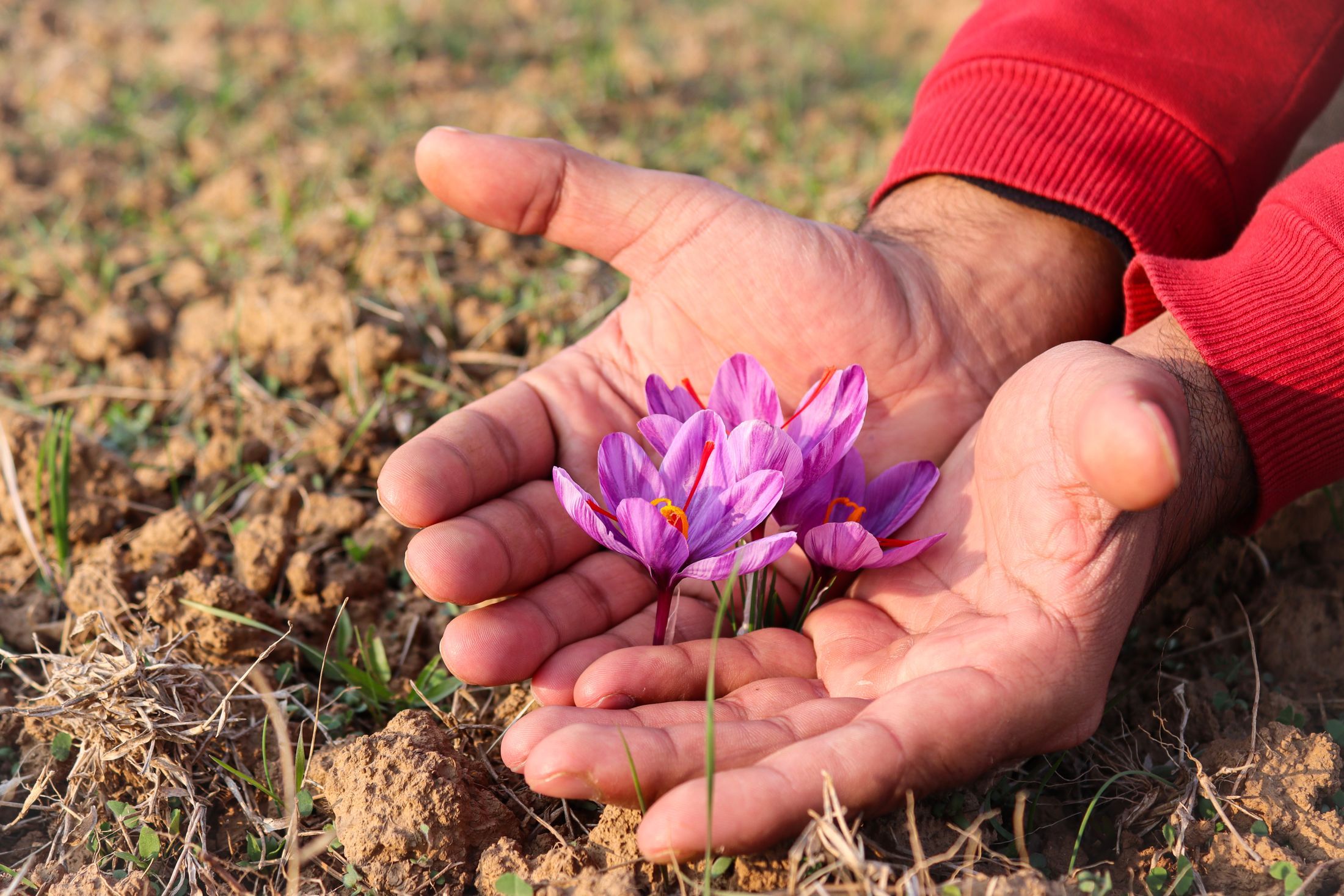
Kashmiri kesar is saffron grown on the Karewa plateaus around Pampore, about 15 kilometres south of Srinagar, at roughly 1,600 metres. India has grown saffron there for at least two thousand years, and since 2020 the name Kashmir Saffron has been protected by Geographical Indication No. 635, which means only saffron grown and processed in the registered area can legally carry it. Our GI tag guide explains what that protects.
Kashmiri saffron is traded in three traditional grades, which are the words you will see on packets:
Mongra is the top grade: only the deep red stigma tips, with the yellow style trimmed away. It has the highest colouring strength and is what you should expect when paying Kashmiri prices.
Lacha is the whole stigma, red tip plus some of the pale style, still attached. It is genuine saffron but weaker by weight, and cheaper.
Zarda or Guchhi includes more style and broken material, and is the lowest grade.
These Kashmiri grades correspond loosely to the Persian terms, where negin and super negin are the all-red grades and pushal includes style, and to the Spanish coupe (all red) and mancha. Internationally, all of them are measured against ISO 3632, which grades saffron by its colouring strength. Saffron grades explained maps the Kashmiri, Persian and Spanish names onto the ISO categories.
Kesar in the kitchen
Kesar in Indian cooking is most often bloomed in warm milk rather than water, which suits the dishes it goes into:
- Kesar doodh or kesar badam milk: warm milk with saffron, often cardamom and almonds. Our saffron milk recipe covers it.
- Kesar pista kulfi, kesar kheer, shrikhand, kesar peda, rasmalai and phirni: the great saffron desserts, all dairy-based.
- Biryani and zafrani pulao: saffron milk poured over the top layer of rice before the pot is sealed, giving the orange and white streaks. Saffron rice three ways has the method.
- Kashmiri kahwa: green tea with saffron, cardamom, cinnamon and almonds. The kahwa recipe is the Srinagar version.
- Kesar lassi, kesar chai and festive sweets for Diwali, Eid, Holi and weddings.
In Ayurveda, kesar is taken in warm milk as a daily tonic, and there is a widespread belief that saffron milk in pregnancy gives the baby a fair complexion. It does not; skin colour is genetic. Saffron in normal culinary amounts is considered safe in pregnancy, but the complexion claim has no basis and the large doses sometimes recommended are not a good idea. Is saffron safe? covers pregnancy, children and medications.
Kesar vs kesari
Kesari is simply the adjective, saffron-coloured, and it has wandered a long way from the spice. Rava kesari, the South Indian semolina sweet, is usually coloured with orange or yellow food colouring, not saffron, and takes its name from the colour. Kesari bath is the same dish in Karnataka. Kesari milk and kesari peda sometimes contain real saffron and sometimes do not. The ingredient list will say saffron or kesar if it is there; if it says colour or E102 or E110, it is not.
Buying real kesar outside India
If you live in the US, UK, UAE, Canada or Australia and want the kesar you grew up with, the same checks apply as for any saffron:
- Buy threads, not powder. Powder is where the fakes live. Threads vs powder explains why.
- Look for a harvest date and a lot number. Kashmiri saffron is harvested in late October and November; a packet with no date could be years old.
- Expect a lab number. Genuine Category I saffron has an ISO 3632 colouring strength above 200, and a seller charging Kashmiri prices should be able to show the report for the batch.
- Check the price against reality. Kashmiri Mongra sells at retail for roughly $18 to $22 per gram internationally. Iranian super negin is $5 to $10. A packet labelled Kashmiri at Iranian prices is Iranian, or worse. Saffron price per gram has the current ranges.
- Do the water test. Real kesar releases a slow, clear gold into warm water over 15 minutes while the threads stay red. Fakes dump colour at once and go pale.
We buy at the field in Pampore every October, test each lot to ISO 3632, and print the lot code, colouring strength, harvest month and grower on the vial. The report for any lot is on the verify page, and sizes from 0.5 g are on the saffron page. Where to buy Kashmiri saffron compares the options country by country.
Read next: Kashmiri vs Persian vs Spanish saffron and How to spot fake saffron.
Questions people ask
Is kesar the same as saffron?
Yes. Kesar is the Hindi and Urdu word for saffron, the dried stigmas of the Crocus sativus flower. Kesar in English is saffron; saffron in Hindi is kesar. There is no difference in the spice, only in the language.
What is the difference between kesar and zafran?
None in the spice. Kesar comes from the Sanskrit kesara and is used across North India. Zafran, za'faran or zaffran comes from Arabic and Persian and is used in Urdu, Persian, Arabic and in Hyderabadi and Mughlai cooking. English saffron descends from the same Arabic root via medieval French. All three words name the same product.
What is Kashmiri kesar?
Kashmiri kesar is saffron grown in the Kashmir valley, mainly around Pampore, and protected since 2020 by Geographical Indication No. 635. It is sold in three traditional grades: Mongra (the all-red stigma tips, the highest grade), Lacha (whole stigmas with some yellow style attached) and Zarda or Guchhi (lower grades with more style). In Kashmiri the plant is called kong and the flower kong posh.
Why is kesar so expensive in India?
Because Kashmir produces only a few tonnes of saffron a year, demand across India for weddings, festivals, sweets and Ayurveda far exceeds supply, and poor harvests in 2024 and 2025 pushed wholesale prices in Pampore to record levels. Much of the cheap kesar sold in India is Iranian saffron relabelled, or outright fakes. Genuine Kashmiri Mongra costs several hundred rupees per gram at wholesale and more at retail.
Is kesari the same as kesar?
Kesari is an adjective meaning saffron-coloured, and also the name of the South Indian semolina sweet rava kesari. Most rava kesari is coloured with orange food colouring, not saffron, and the name refers to the colour. Kesari milk, kesari peda and kesari bath may or may not contain real kesar; check the ingredients.
Written by the Kashmiri Treasures team in Srinagar. We buy at the field in Pampore, test every lot to ISO 3632, and print the result on the vial. See who we are or verify a lot.