Saffron Dosage Per Day: How Many Threads for Cooking, Sleep, Mood and PMS
How much saffron to take per day in threads and milligrams: the 28 to 30 mg trial dose, culinary amounts, the upper limit, and how to count threads without a scale.
By Kashmiri Treasures · October 31, 2026 · 5 min read
For cooking, saffron has no daily dose; you use what the dish needs, typically 10 to 20 threads for four people. For the effects that have been studied in clinical trials, better mood, better sleep and easier premenstrual symptoms, the dose is 28 to 30 mg of saffron a day, which is about 12 to 15 threads of good Kashmiri Mongra. The safety ceiling is 1.5 g a day, fifty times higher, and nobody gets there by accident.
This guide turns those milligrams into threads you can count, explains where the 30 mg figure comes from, gives the timing and form for each purpose, and sets out what not to exceed. It summarises published research and is not medical advice; see our disclaimer and talk to your doctor if you take medication.
Threads to milligrams
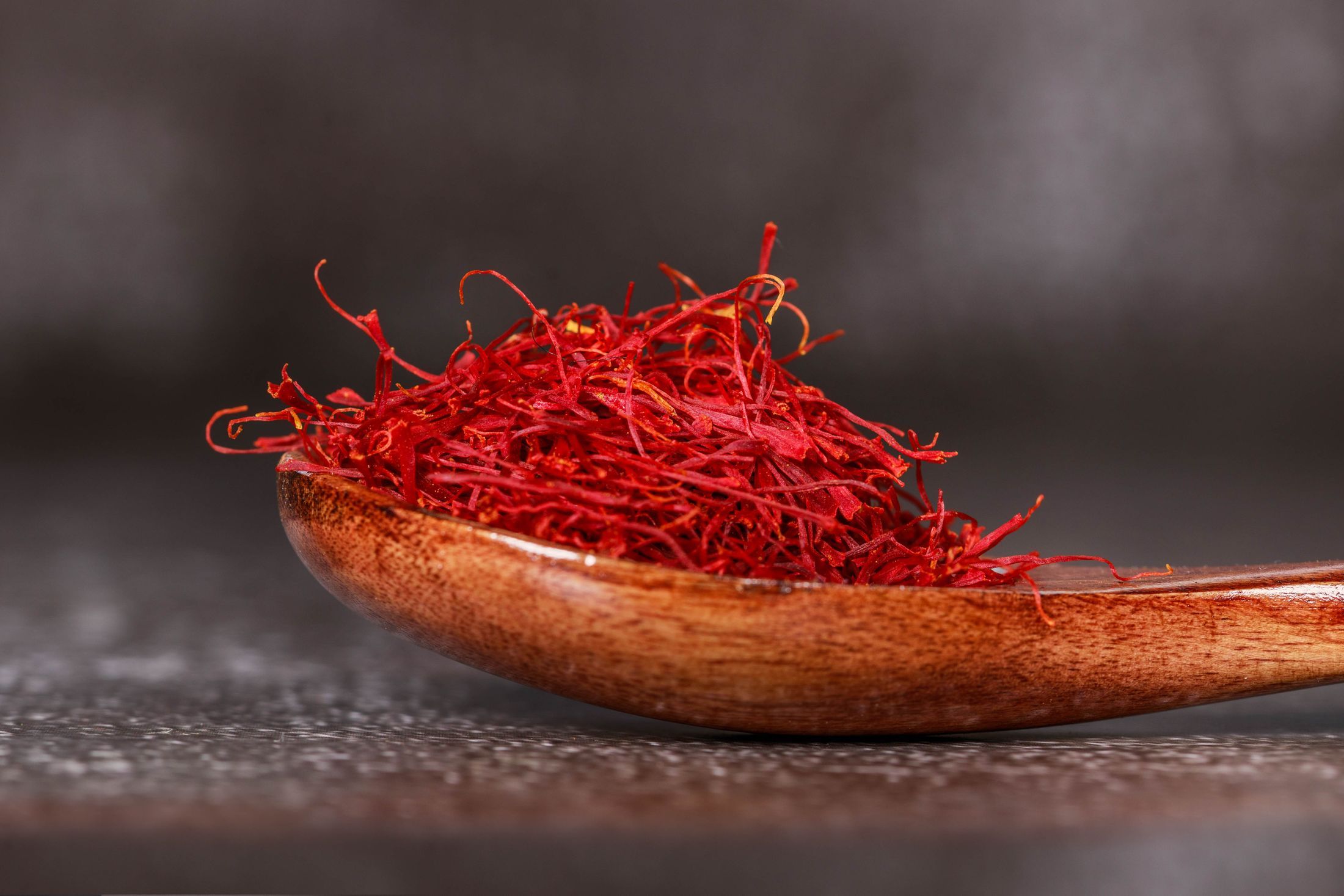
A single dried saffron stigma from a good Kashmiri lot weighs roughly 2 mg. Threads vary: thick, well-dried Mongra tips can be 2.5 mg, thinner Persian threads nearer 1.5 mg. That gives the following rough conversions.
| Threads | Approximate weight | What it is |
|---|---|---|
| 4 to 6 | 10 mg | a cup of saffron milk or tea |
| 12 to 15 | 30 mg | one day’s dose in most clinical trials |
| 15 to 20 | 40 mg | a generous pinch for a rice dish serving four |
| 30 to 40 | 80 mg | a large biryani or a batch of saffron buns |
| about 450 | 1 g | one vial; 20 to 30 dishes |
| about 700 | 1.5 g | the daily ceiling; never exceed |
Count out 15 threads onto a white saucer once. After that you will recognise the pinch by eye, which is how every cook in Kashmir does it. If your saffron is Category I with a crocin number above 200, you are at the strong end and 12 threads is enough; if it is weaker or older, use 15.
Where 30 mg comes from
Almost every randomised trial of saffron for mood, from the Tehran studies of the 2000s through later work in Australia and Europe, used 30 mg a day, either as a dried stigma powder in capsules or as a standardised extract. Trials of PMS used the same 30 mg. Trials of sleep have used 14 to 28 mg of a standardised extract. The figure was not derived from a dose-finding study so much as inherited from traditional use and then confirmed as effective and well tolerated; a few trials have tested 15 mg and 60 mg and found 30 mg a sensible middle.
So when supplement labels and articles say 30 mg, that is why. Saffron benefits: what the research says goes through the trials and their results.
Dose by purpose
Cooking. Ten to twenty threads for four people in rice, stews or desserts; four to six in a cup of milk or tea; two or three on a single portion. Bloom them first. How much saffron per dish has a table by recipe.
Mood. Thirty milligrams a day, about 15 threads, for at least four to six weeks; most trials ran six to twelve. Taken as threads steeped in warm milk or water, or as a standardised capsule. Trials split it morning and evening or gave it once; both appear to work. If you take an antidepressant, discuss adding saffron with the prescriber first. Saffron for depression and anxiety reviews the evidence.
Sleep. Fourteen to 28 mg of a standardised extract, or 10 to 15 threads, in the evening an hour before bed. Warm milk is the traditional vehicle and probably helps on its own. Four weeks is the usual trial length. Saffron for sleep has the detail.
PMS and period pain. Thirty milligrams a day throughout the cycle for at least two cycles. Saffron for PMS and periods.
Skin. Topically, a few threads soaked in milk for a mask; by mouth there is no established dose and no good evidence it helps skin. Saffron for skin.
The upper limit
Reviews of saffron safety put the threshold for side effects at about 1.5 g a day. Below it, the effects seen in trials are mild: occasional nausea, dry mouth, headache or drowsiness. Above it, nausea, vomiting, dizziness, low blood pressure, bleeding and yellowing of the skin have been reported, and 5 g or more at once is toxic. There is no reason for anyone to take more than 100 mg a day, and no evidence that more works better. Saffron side effects sets out who should be especially careful: pregnant women, people with bipolar disorder and anyone on antidepressants or blood thinners.
How much saffron this uses
Fifteen threads a day is about 30 mg, so a 1 g vial lasts a month and a 2 g vial two months. At our 1 g price that is roughly 60 cents a day. Stored closed, dark and cool the vial keeps its strength for two years; buying 10 g to save money on a daily habit makes sense only if you split it into small vials. How to store saffron explains why.
Dose only works if the saffron is real. A daily 30 mg of dyed safflower is 30 mg of nothing. Buy whole threads with a per-lot ISO 3632 report, and check any new vial with the water test: slow yellow over 15 minutes, threads still red. Our lots are tested per batch and the number is on the vial; see the saffron page and the verify page.
Read next: Saffron side effects and Saffron milk recipe.
Questions people ask
How much saffron should I take per day?
For general use in food, there is no daily target; a pinch of 10 to 20 threads in a dish is normal. For the effects studied in trials, mood, sleep and PMS, the dose is 28 to 30 mg a day of saffron, which is about 12 to 15 threads of good Kashmiri saffron, taken as threads in milk or tea or as a standardised extract. Do not exceed 1.5 g a day.
How many saffron threads is 30 mg?
About 12 to 15 threads. A single dried Mongra stigma weighs roughly 2 mg, so 30 mg is around 15 threads; thicker threads from a strong lot may need only 12. Count them out once onto a saucer and you will quickly learn what the pinch looks like.
Can I take saffron every day?
Yes. Trials have given 30 mg a day for 6 to 12 weeks with mild, infrequent side effects, and many households have saffron in milk or tea daily. Stay under 1.5 g a day, which no normal use approaches. Pregnant women should stick to culinary amounts.
Is it better to take saffron in the morning or at night?
For sleep, in the evening, an hour or so before bed, usually in warm milk. For mood, trials split 30 mg into two 15 mg doses, morning and evening, or gave it once a day; either works. For PMS, daily through the cycle. For cooking, whenever the recipe calls for it.
Are saffron capsules better than threads?
Capsules give a precise, standardised dose, which is why trials use them; threads give the same compounds with a few threads' variation and taste better. Fifteen threads of lab-tested Category I saffron a day is a reasonable equivalent to a 30 mg capsule. Avoid capsules that do not name the saffron content or that list saffron extract without a standardisation.
Written by the Kashmiri Treasures team in Srinagar. We buy at the field in Pampore, test every lot to ISO 3632, and print the result on the vial. See who we are or verify a lot.