What Colour Is Saffron? Why Red Threads Turn Food Gold, the Hex Code, and How to Get the Colour Right
Why saffron threads are red but food turns gold, the chemistry of crocin, the saffron hex codes, how it differs from turmeric and dye, and how to get even colour in rice.
By Kashmiri Treasures · October 31, 2026 · 5 min read
Saffron the spice is red. Saffron the colour is gold. Both are correct, and the gap between them confuses people enough that it is worth explaining properly. The dried stigma of the saffron crocus is a deep crimson; what it does to rice, milk or water is a warm golden yellow shading to orange. The named colour saffron, hex #F4C430, is the second of these, and the flag of India’s saffron, #FF9933, is a deeper version of the same thing.
The reason is one molecule, crocin, and the way concentration changes how we see it. This guide explains the chemistry briefly, gives the colour codes, shows how saffron’s colour differs from turmeric’s and from dyes, and then gets practical: how to get a deep, even saffron colour in rice, milk and sweets, and how to read colour as a quality test.
Red threads, gold food
Crocin is a carotenoid, the family of pigments behind carrots, tomatoes and autumn leaves. Unlike most carotenoids, it is bound to sugars, which makes it water-soluble; that is why saffron colours rice, milk and tea but does little in oil.
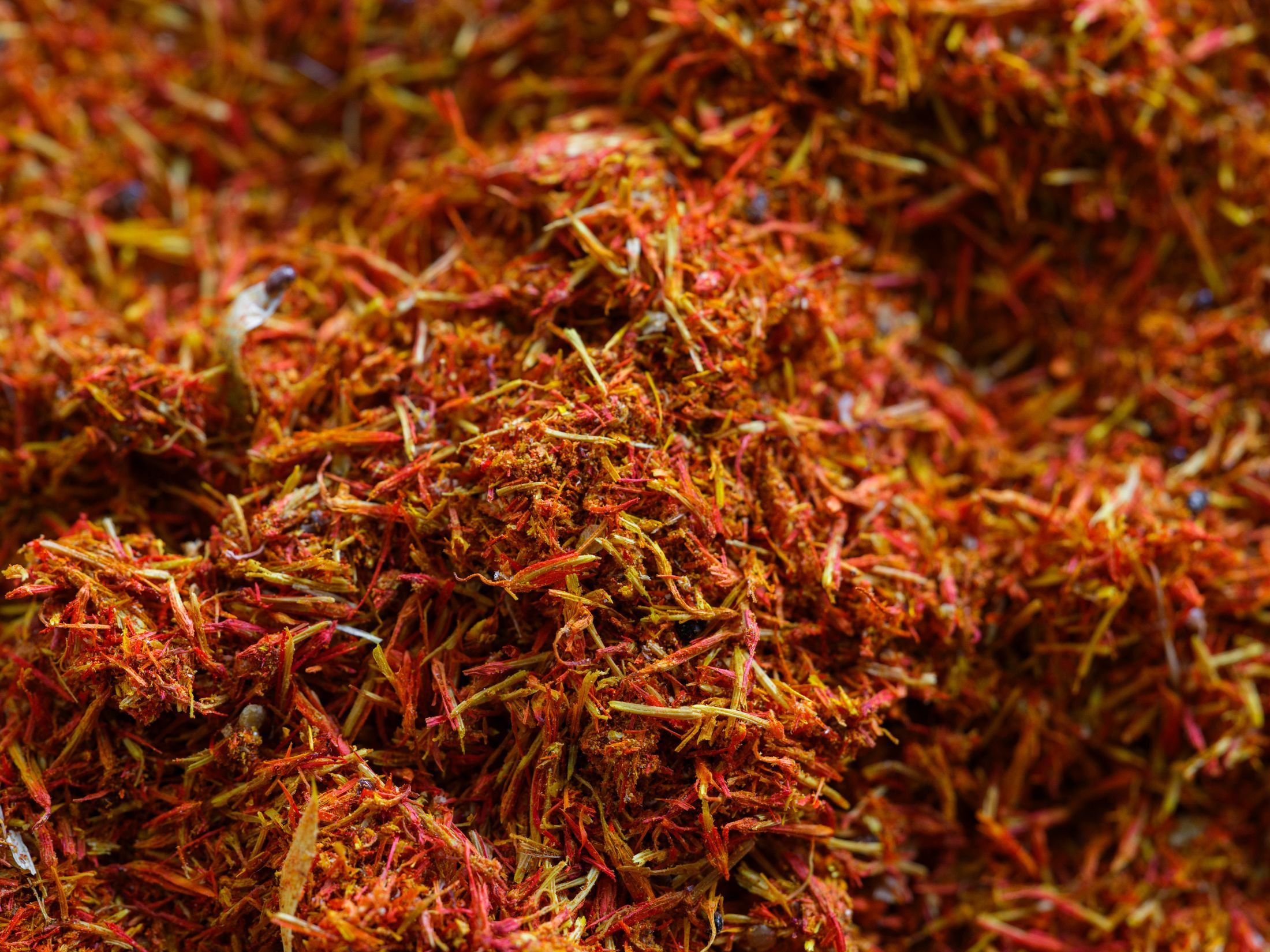
In the dried stigma, crocin is packed at extraordinary density, and dense pigment absorbs almost all the light that hits it, reflecting only a narrow deep red. Dissolve a few threads in a cup of water and the same molecules are spread thin; now they absorb blue light and transmit the rest, which we see as golden yellow. Add more saffron and the gold deepens towards orange. This is the same effect as a strong cup of tea looking dark red-brown in the pot and amber in the cup.
Saffron’s colouring strength is measured exactly this way. The ISO 3632 standard dissolves a weighed sample in water and reads how much light it absorbs at 440 nm, in the blue; the higher the absorbance, the more crocin, the stronger the saffron. Category I saffron reads above 200. Our quality and testing page explains the measurement.
The colour codes
| Name | Hex | What it is |
|---|---|---|
| Saffron (web colour) | #F4C430 | golden yellow; a cup of saffron water or milk |
| Deep saffron | #FF9933 | orange-gold; saffron rice, the Indian flag |
| Indian saffron (kesari) | #FF7722 | the deeper orange of some flags and robes |
| Saffron thread | about #8B1A1A | the crimson of the dried stigma itself |
Real saffron in food spans the top three rows depending on how much you use and in what. Rice streaked with bloomed saffron shows the full range from pale gold to orange in one dish.
Saffron versus turmeric versus dye
Three yellows are commonly mistaken for one another.
Saffron gives a clear, translucent, warm gold that looks lit from inside, and it brings aroma with it. It is water-soluble, so it colours liquids and starches and leaves oil alone.
Turmeric gives a flat, opaque, slightly greenish yellow from curcumin, which is oil-soluble. It coats rather than infuses, colours oil readily, and has an earthy taste. In rice, turmeric looks painted on; saffron looks like light. Saffron vs turmeric goes further.
Synthetic dye, tartrazine or sunset yellow, is what fake saffron and cheap paella mixes use. It is a hard, bright, even yellow or orange that appears instantly in water, has no aroma, and looks slightly artificial next to real saffron. Instant colour is the tell.
Getting the colour right in the kitchen
Bloom first, always. Dry threads added to a pot release colour slowly and unevenly, leaving yellow spots and red specks. Steep 15 to 20 threads in three tablespoons of warm water, milk or stock for 15 to 20 minutes until the liquid is deep gold, then use the liquid.
Crush for more colour. Grinding the threads with a pinch of sugar in a mortar before blooming breaks the cells open and releases more crocin faster. This is the Persian method and gives the deepest colour from the fewest threads.
Warm, not boiling. Hot water extracts faster than cold, but boiling drives off the aroma. Water you can hold a finger in is right. For the deepest colour with the least aroma loss, bloom overnight in the fridge.
Add late. Long cooking fades crocin and evaporates safranal. Stir bloomed saffron into rice, risotto or a sauce in the last few minutes.
Streaks or uniform? For biryani and Persian rice, drizzle the saffron liquid over the top layer and do not stir: you get streaks of orange and gold against white. For risotto, paella, kheer and milk, stir through for an even gold.
Acid brightens. A squeeze of lemon in saffron water or tea shifts the colour brighter and clearer. Alkaline conditions dull it.
Dairy warms it. In milk and cream, saffron reads as a soft apricot gold rather than the clear yellow of water. Kulfi and shrikhand are this colour.
How much saffron to use has thread counts for every dish, and how to use saffron covers technique in depth.
Why Kashmiri saffron colours more
The depth of colour you get per thread depends on crocin content, which is highest in stigma-only saffron picked at peak bloom and dried promptly. Kashmiri Mongra, which is all red tip with the yellow style trimmed away, tends to test at the high end of the Category I range, which is why cooks who switch to it find they use fewer threads. Lacha and other grades that include style give less colour by weight. Saffron grades explained covers the differences, and every vial we sell prints its own lot’s colouring strength; see the saffron page.
Read next: How to spot fake saffron and How much saffron to use.
Questions people ask
What colour is saffron?
The spice is deep crimson red; the colour it gives food is golden yellow to orange. The named web colour saffron is a warm golden yellow, hex #F4C430. The same pigment, crocin, is responsible for both: concentrated in the dried thread it looks red, dissolved in water it is yellow.
Why do red saffron threads make food yellow?
Crocin, the pigment, is a water-soluble carotenoid. Packed densely in the dried stigma it absorbs so much light that the thread looks dark red. Dissolved and diluted in water, milk or rice, the same molecule transmits golden yellow. Diluting any strong dye lightens it; crocin shifts from red to gold as it does so.
What is the saffron hex code?
The web colour named saffron is #F4C430, a golden yellow. Deep saffron, closer to the colour of saffron rice, is #FF9933, which is also the saffron of the Indian flag. Real saffron in food ranges across that span depending on concentration.
How do I get a deep saffron colour in rice?
Bloom 15 to 20 threads in three tablespoons of warm water for 15 to 20 minutes, until the liquid is deep gold, then add the liquid, not dry threads, to the rice near the end of cooking. For streaks, drizzle it over the top layer; for uniform gold, stir it through. Crushing the threads with a pinch of sugar before blooming releases more colour.
How is saffron colour different from turmeric colour?
Turmeric gives a flat, slightly greenish, opaque yellow from curcumin, which is oil-soluble. Saffron gives a clear, warm, translucent gold from crocin, which is water-soluble, and it carries aroma with it. Side by side in rice, turmeric looks like paint and saffron looks like light.
Written by the Kashmiri Treasures team in Srinagar. We buy at the field in Pampore, test every lot to ISO 3632, and print the result on the vial. See who we are or verify a lot.