Saffron Tea Recipe: Plain, Iced, With Cardamom or Chamomile, and How It Differs From Kahwa
How to make saffron tea with the right thread count and steeping time, four variations including iced and bedtime versions, and what the research does and does not say.
By Kashmiri Treasures · October 31, 2026 · 5 min read
Saffron tea is five to eight threads of saffron steeped in a cup of hot water for eight to ten minutes. That is the entire recipe. The cup turns a clear gold, smells of honey and hay, and tastes floral and lightly bitter, like a very delicate herbal tea with a long finish. There is no caffeine and almost nothing in the way of calories unless you add honey.
It is the simplest way to drink saffron and the best way to taste a new vial, because there is nothing to hide behind. It is also the base for a dozen variations: with cardamom in the Gulf and Iran, with honey and lemon, iced in summer, with chamomile at night, and, with green tea and whole spices, as Kashmiri kahwa.
This guide gives the plain recipe with quantities and timings that work, the main variations, and a plain-spoken look at what saffron tea does and does not do for you.
Plain saffron tea
Makes 1 cup. 10 minutes.
- 250 ml water
- 5 to 8 Kashmiri saffron threads
- Honey, to taste (optional)
- Boil the water and let it stand for about a minute, so it is around 90°C rather than at a rolling boil. Very hot water is fine for saffron but boiling water drives off some of the aroma.
- Put the threads in a cup or small teapot and pour the water over them.
- Cover and steep for 8 to 10 minutes. Covering matters: saffron’s aroma compound, safranal, is volatile and a lid keeps it in the cup.
- Sweeten if you like, and drink with the threads in or strained out. The threads are edible and most people leave them.
The colour should develop gradually over the steeping time, from pale yellow at two minutes to clear gold at ten, while the threads themselves stay red. If the water turns orange within seconds and the threads go pale, the saffron is dyed; see how to spot fake saffron.
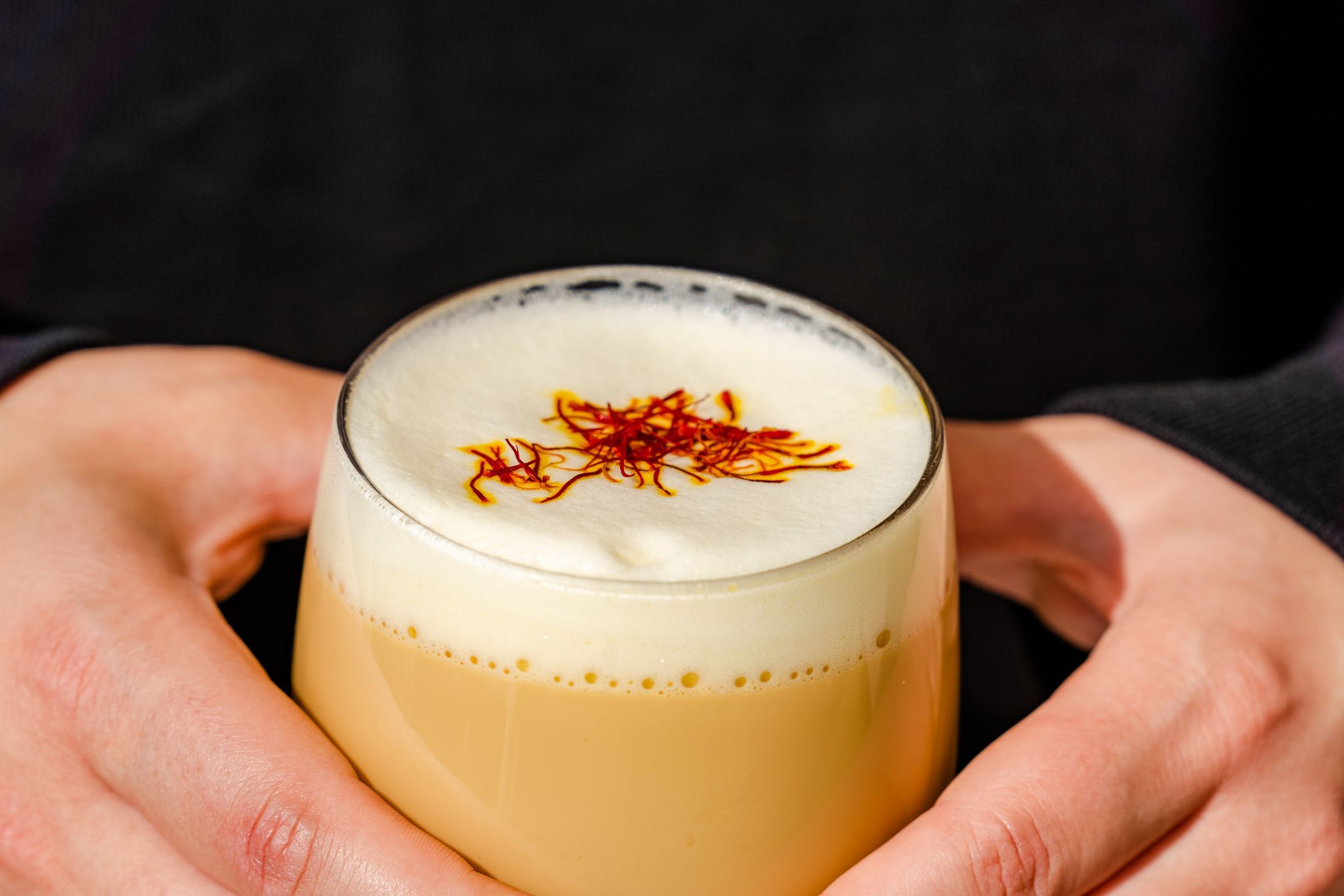
Variations
Saffron and cardamom. Add one lightly crushed green cardamom pod with the saffron. This is the everyday saffron tea of Iran and the Gulf, and the pairing is so natural it is hard to go back. A thin slice of fresh ginger alongside makes it a winter drink.
Saffron, honey and lemon. Steep as above, stir in a teaspoon of honey and a squeeze of lemon. The acid brightens the colour and cuts the bitterness; good when you have a cold.
Iced saffron tea. Make a double-strength brew with 12 to 15 threads in 250 ml, steep 15 minutes, sweeten while hot, then pour over ice and top up with cold water or sparkling water. Add mint or a few rose petals. This is a serious summer drink and it photographs well.
Saffron and chamomile for bedtime. Steep a chamomile tea bag and five saffron threads together for eight minutes. Both have small clinical literatures on sleep and the flavours agree with each other. Drink an hour before bed.
Saffron and rose. A teaspoon of dried rose petals with the saffron, Persian style. Floral on floral; sweeten lightly.
Saffron black tea. Add three or four threads to a pot of lightly brewed black tea. Common in Afghanistan and parts of Pakistan. The tannin of the black tea sits oddly with saffron for some people; try it with milk, which rounds it off.
Kashmiri kahwa. Green tea, saffron, cardamom, cinnamon, almonds and sugar, brewed in a samovar if you have one and a saucepan if you do not. This is the one with a real recipe and we give it in full in the Kashmiri kahwa recipe.
What saffron tea tastes like
Expect something closer to a fine herbal infusion than to tea. The first impression is aroma: honey, fresh hay and something faintly leathery. The taste is floral and softly sweet with a dry, pleasant bitterness that builds across the back of the palate and lingers. Good Kashmiri saffron gives a rounder, sweeter cup; Persian saffron is slightly sharper and cleaner. Both are good. What does saffron taste like goes into the three compounds responsible.
If the cup tastes of nothing, either the saffron is old or it is not saffron. If it tastes strongly medicinal, use fewer threads next time.
Saffron tea benefits: what the evidence says
Saffron is one of the few kitchen spices with a body of randomised trials behind it, nearly all using standardised extracts at 28 to 30 mg of saffron a day for several weeks. At those doses, small studies have reported modest improvements in mild to moderate low mood, in sleep quality, in premenstrual symptoms and in some measures of eye health. The studies are small, mostly from a handful of research groups, and the effects are modest. Saffron benefits: what the research actually says reviews them properly.
A cup of saffron tea with six threads contains roughly 12 mg of saffron. Two cups a day gets you to the studied range; one cup is half of it. So a daily cup is a reasonable habit with a plausible small upside and essentially no downside, and it is also just a good drink. What it is not is a treatment for depression, insomnia or anything else. If you are being treated for any of those, saffron tea is fine as a drink but talk to your doctor before taking saffron supplements, especially alongside antidepressants or blood thinners. Is saffron safe? covers interactions, pregnancy and children.
The one benefit nobody disputes: saffron tea is caffeine-free, so it is a good evening drink for people who miss the ritual of tea after 6 pm.
Which saffron to use
Tea is unforgiving, so use good threads. Kashmiri Mongra gives the deepest gold and the sweetest aroma per thread, which is why we suggest five threads where a Persian or Spanish saffron might need seven or eight. Avoid ground saffron for tea; it clouds the cup and has usually lost its aroma. Threads vs powder explains why.
Our saffron is harvested in Pampore each October, tested to ISO 3632 and sold with the lot’s colouring strength on the vial, in sizes from 0.5 g. See the current lot on the saffron page.
Read next: Saffron milk recipe and How to use saffron.
Questions people ask
How many saffron threads for a cup of tea?
Five to eight threads for a 250 ml cup of plain saffron tea. Five gives a pale gold cup with a clear honey aroma; eight is bold and starts to show saffron's bitter edge. Add the threads to water just off the boil and steep, covered, for 8 to 10 minutes. Steeping longer extracts more colour but not much more flavour.
Is saffron tea the same as Kashmiri kahwa?
No. Kahwa is a Kashmiri green tea brewed with saffron, cardamom, cinnamon and sometimes cloves, served with crushed almonds and often sweetened. Plain saffron tea is saffron steeped in hot water with nothing else, or with one companion such as honey, lemon or cardamom. Kahwa is a full recipe; saffron tea is an infusion.
What is saffron tea good for?
The clinical evidence for saffron concerns standardised extracts at about 28 to 30 mg a day, where small trials have found modest benefits for low mood, sleep quality and premenstrual symptoms. A cup of saffron tea with six threads contains roughly 12 mg of saffron, so a daily cup sits at the lower end of that. It is a pleasant, caffeine-free, essentially calorie-free drink with a plausible small benefit, not a medicine.
Can I drink saffron tea every day?
Yes. A cup or two a day, at five to eight threads a cup, is well within the amounts considered safe for adults, which is usually put at up to about 1.5 g of saffron a day. Pregnant women should keep to culinary amounts and avoid saffron supplements. Anyone on antidepressants or blood thinners should check with their doctor before taking saffron regularly in any form.
Why does my saffron tea taste bitter?
Too many threads, or water that was boiling hard when the saffron went in. Saffron's bitter compound, picrocrocin, is pleasant at five threads a cup and medicinal at fifteen. Use fewer threads, let the kettle sit for a minute after boiling, and balance with a little honey. Tea that is bitter with only a few threads and barely coloured is probably old saffron.
Written by the Kashmiri Treasures team in Srinagar. We buy at the field in Pampore, test every lot to ISO 3632, and print the result on the vial. See who we are or verify a lot.